Bounce Haus Co: From a price list and some photographs to a business you can book.
Visit the website (opens in a new tab)
Davey and Alice had jumping castles, party equipment, a price list and photographs. They were getting a new business ready to launch, and they needed a website.
They didn’t arrive with a document explaining how equipment availability should work, what should happen when somebody changed their booking, or how a refundable bond would find its way back to the customer.
Working that out was a substantial part of my job.
You shouldn’t have to know how to build the thing you’re hiring someone to build.
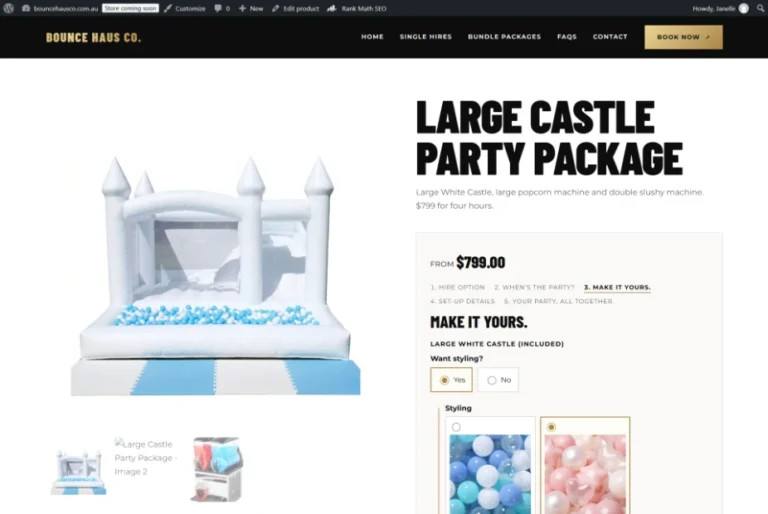
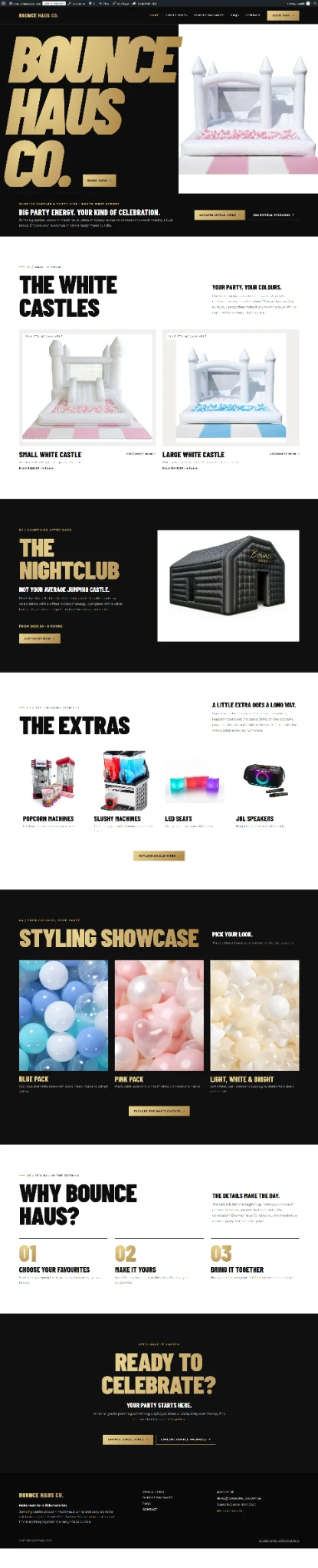
Bounce Haus Co hires out jumping castles and party equipment across South West Sydney. There are white castles with ball pits, an inflatable nightclub, popcorn and slushy machines, lighting, speakers and packages that bring several of those things together.
A price list tells you what those things cost. Turning it into a working booking system takes a few more conversations.
Can customers choose their own start time? How long does setup take? Does an overnight booking make that equipment unavailable the next morning? What happens if there’s no power at the venue? Which extras are included, and which cost more?
And when a customer books a package containing a popcorn machine, the website needs to know that the same popcorn machine can’t go to another party.
Davey and Alice knew their equipment and how they wanted to run the business. I knew which questions we needed to answer to make the website support it.
Some things were already built by the time they thought to ask.
Availability checking was one of them.
If a customer can pay to hire something, we need to know it’s available. That includes equipment sold individually, included in packages or offered as an extra. It also means allowing time to deliver it, set it up, collect it and get it ready for the next booking.
I had that checking coded before it was requested.
That’s part of what you’re getting when you hire someone who thinks about the business behind the website. You can explain what you want to sell without having to anticipate every technical requirement yourself.
The customer has a party to organise.
They probably don’t want to spend their evening having a deeply administrative experience with a jumping castle.
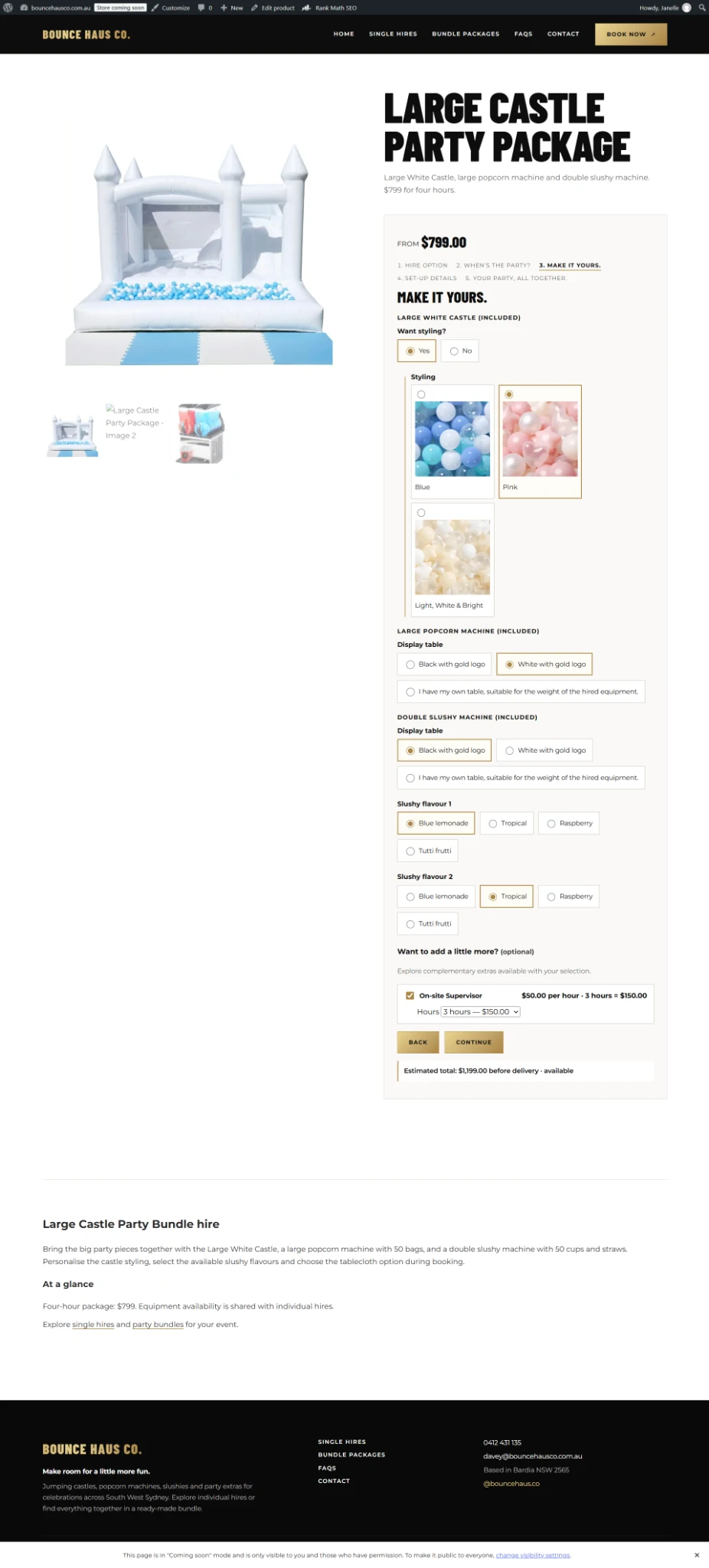
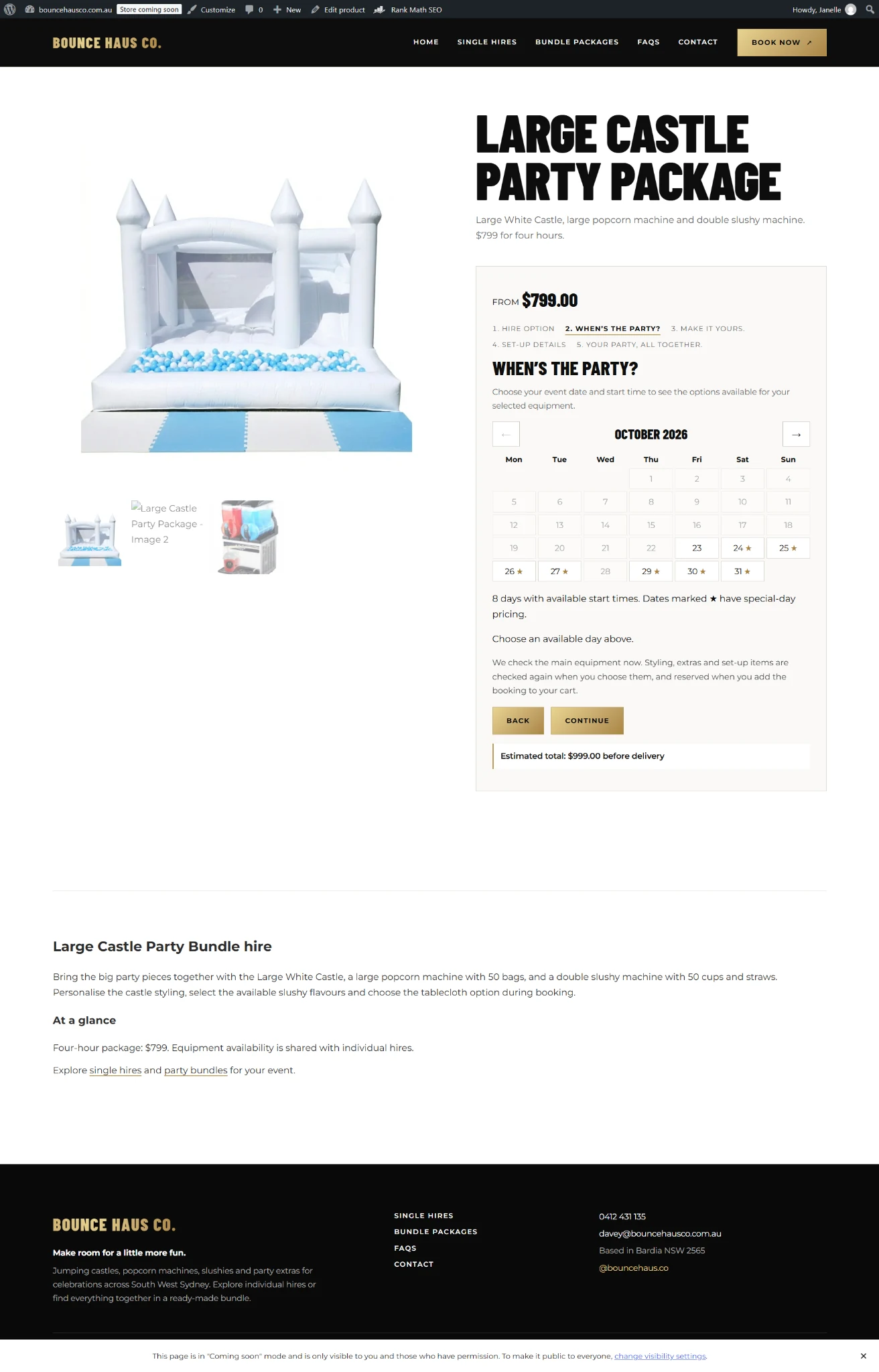
They need to see the equipment, understand what’s included, choose a date and time, select any extras and find out what it will cost. The business needs an address, event details and answers to practical questions about the setup.
I built those questions into the booking journey, with relevant choices appearing as customers need them. The information they supply becomes part of the booking, and the website explains the things they need to know before paying.
The aim is to collect useful information without making the customer feel like they’ve accidentally enrolled in a course.
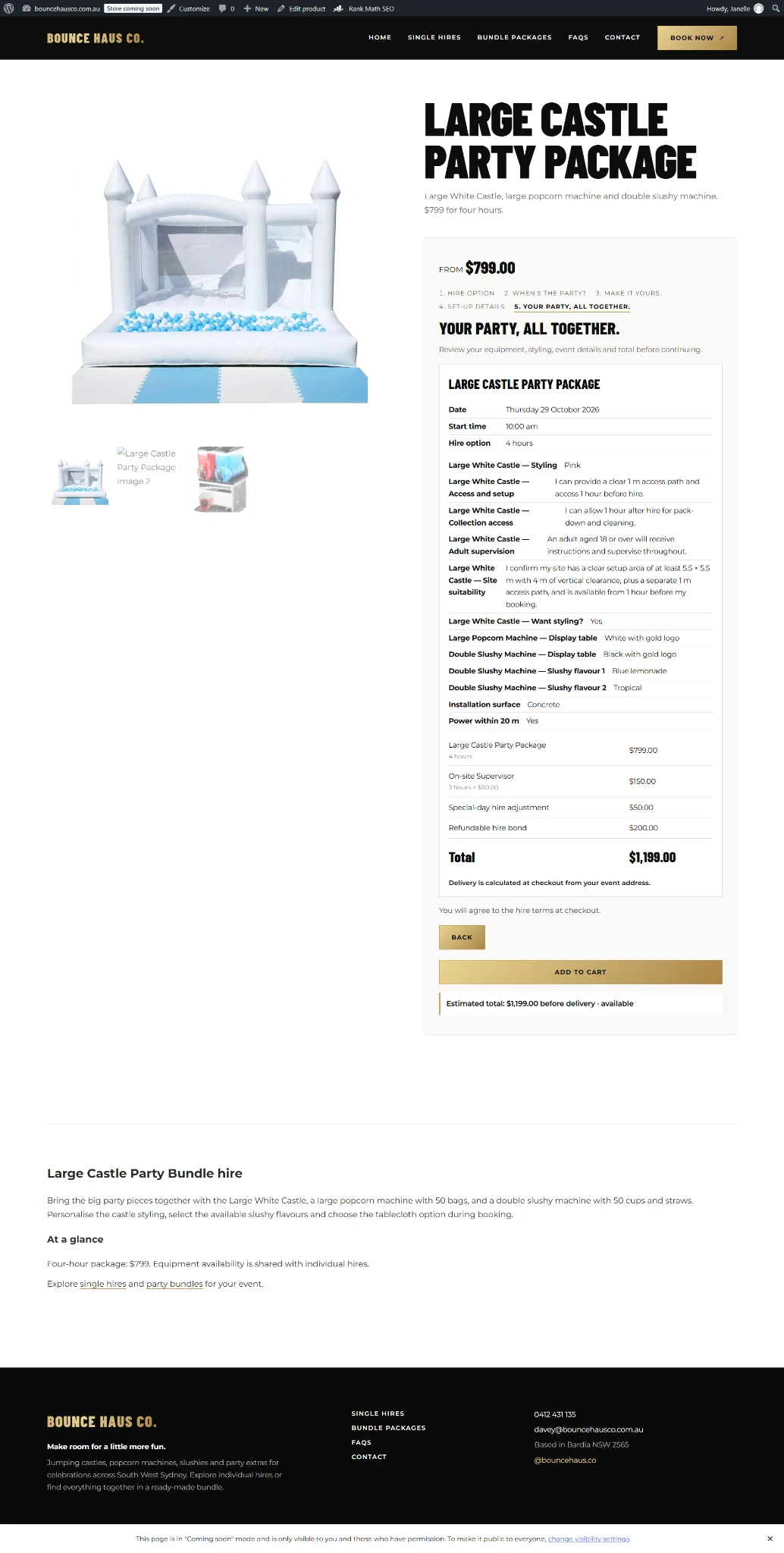
Then somebody has to run the booking.
Once a booking comes in, Davey and Alice need to know what’s going where, when it needs to leave and what still needs their attention.
I built a backend process that carries the booking through its working life. They can see bookings and equipment availability, enter a booking taken over the phone, manage delivery and collection time, and block equipment for maintenance.
They can also handle the things that change. Move a booking. Request an additional payment. Cancel it and release the equipment. Record its return, assess the bond and refund it in full or retain an amount with a documented reason.
The customer emails are part of that system too. They don’t need to write each confirmation manually or assemble a separate collection of email automations before they can start using it.
A new business is going to change its mind about things.
Prices will change. Equipment will be added. Operating hours, delivery arrangements and booking capacity may change as the business grows.
Those are settings the owners can manage.
Part of the work was deciding which things needed to be adjustable, then giving Davey and Alice a sensible place to adjust them. They also have operating instructions and 30 days of support from launch to help them settle in.
And yes, it looks stunning.
We explored three design directions before choosing the bold black-and-white design with gold accents, oversized lettering and video.
The finished design gives Bounce Haus Co a confident introduction. The product photography, package pages and booking screens carry that identity through the customer journey.
There’s a lot happening behind it, but the first impression still matters. People are planning a party. The website should feel like somewhere they’d like to book one.
You can see the three directions I put together for Bounce Haus Co—and how we arrived at this one—in Three mockups. One website. How we find your design.
Ready to get to work.
We tested the customer booking journey and the owner’s admin process, including availability, payments, emails, booking changes, cancellations, maintenance and bond refunds. Davey and Alice tested the customer side too.
The result is a branded website connected to a complete booking process, ready for the business to launch.
They brought their equipment, their plans and their knowledge of the business. I turned that into the structure, design and working system their customers—and the owners themselves—would need.
Got a price list, some photographs and a business to get online? We can start there.
Put this to work for your business.
Explore a complete hire website or add the booking system to your existing site.